
Close Spacing
Engineering A Low D for More Players
free world wide shipping
The Challenge
For centuries, instrument makers have explored ways to overcome the wide finger spacing demanded by the acoustics of low whistles. Solutions have included keys, angled tone holes and chimney-style modifications, but these approaches have generally been complex, labour-intensive or too expensive to make widely accessible.
The Howard Close Spacing project set out to change that.
Our goal wasn't simply to move the finger holes closer together. It was to create a comfortable, accessible Low D that remained recognisably Howard—while keeping it within reach of everyday players.
A Different Approach
Using precision-engineered acoustic modifiers, the finger holes can be positioned significantly closer together while preserving the tuning, balance and musicality expected from a Howard whistle. By combining modern manufacturing techniques with carefully developed acoustic design, the Close Spacing system makes this level of ergonomic improvement practical and affordable, bringing the unique voice of the Low D within reach of more players than ever before.
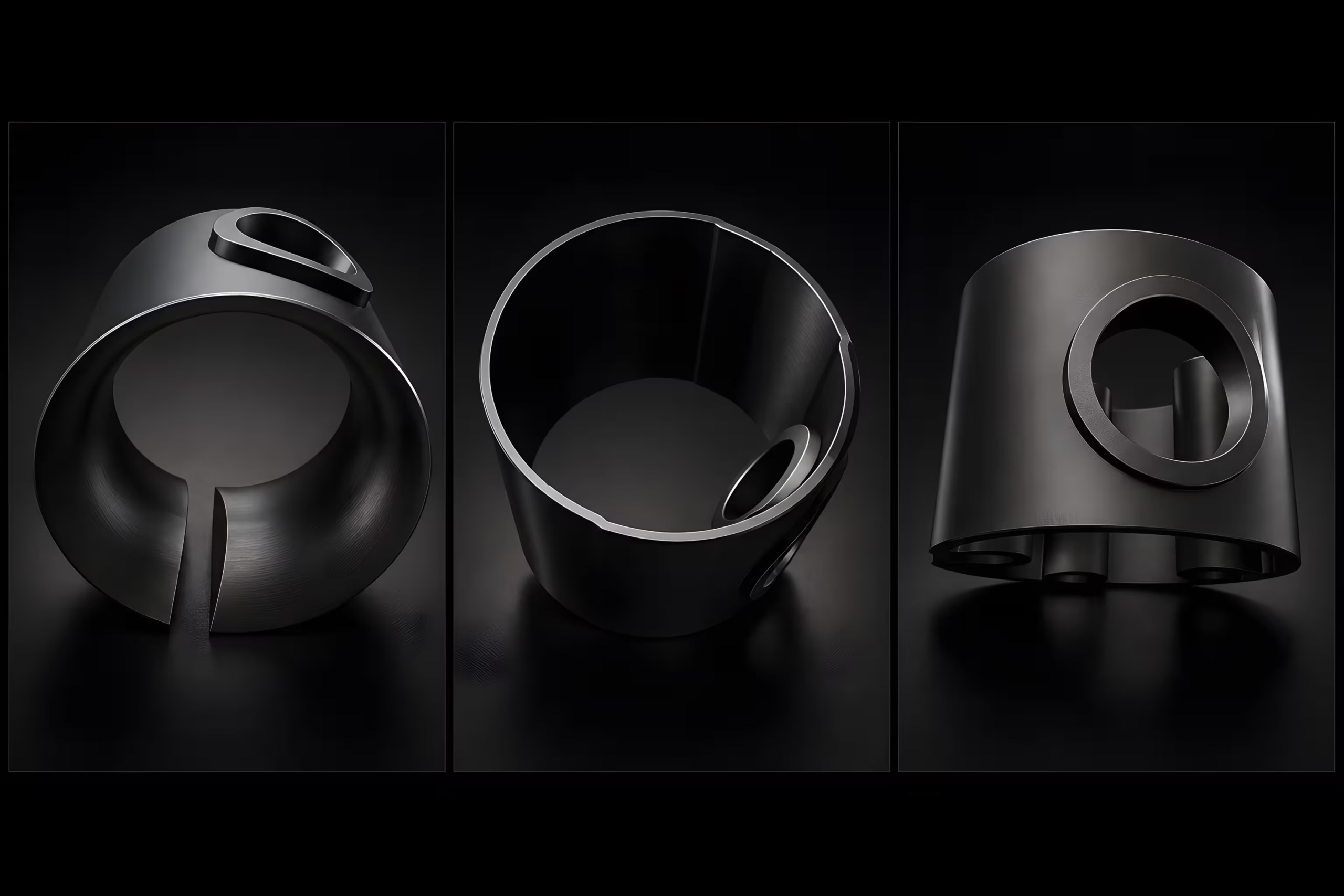
These prototype acoustic modifiers represent different stages in the development of the Howard Close Spacing Low D whistle.
Numerous geometries and configurations were designed, manufactured and evaluated through measurement and extensive listening before the final production design was selected.
The result was an instrument that preserves the tuning, balance and musicality expected from a Howard whistle while developing its own distinctive voice.
Designed by Ear
Every design decision was guided by two things: listening and measurement.
Over the course of development, dozens of acoustic modifier designs were produced and evaluated. Different geometries, asymmetrical profiles, materials and surface textures were tested, not only to achieve accurate tuning, but to shape the instrument's response and character.
The final carbon fibre composite was selected not simply because of its engineering properties, but because extensive listening showed that it produced the musical voice we were seeking.
Voicing The Whistle
Creating a more ergonomic Low D was only half the challenge. Changing the airflow inevitably changes the character. Rather than pretending otherwise, we spent years refining and voicing those changes until the instrument developed a musical identity of its own.
Its acoustic modifiers subtly reshape the airflow, giving the Close Spacing a little more chiff and a more articulate response. During development, the geometry and materials of the acoustic system were refined not simply to achieve the required tuning, but by extensive listening to shape the character of the finished instrument.
Some players will continue to prefer the cleaner, more open character of the standard Howard Low D. Others will appreciate the Close Spacing's more articulate, characterful voice together with its significantly improved ergonomics. Neither is intended to replace the other. They simply offer different playing experiences for different musicians.
Handcrafted in Sheffield
Every Howard Close Spacing whistle is individually handcrafted, assembled and tuned in Sheffield, England.
From machining and finishing to fitting the acoustic modifiers and final voicing, every instrument is built with the same attention to detail that defines every Howard whistle.
Because every musician deserves the opportunity to experience the remarkable sound of a Low D whistle.
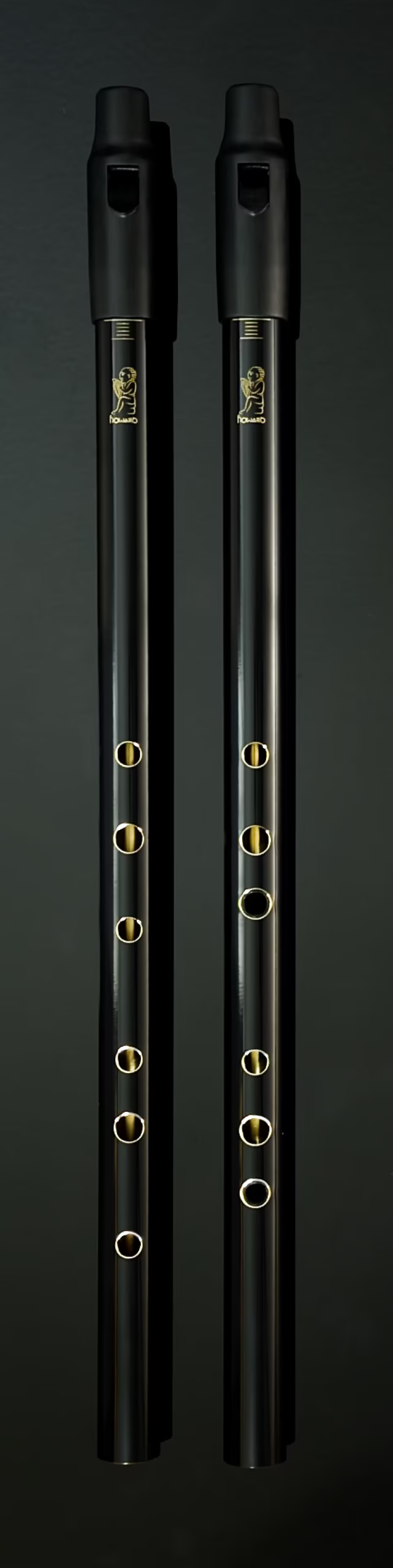
Howard Classic Low D and Close Spacing Low D showing the difference in finger-hole positions.
"I own several whistles, including Susatos and the Carbony Low D with close finger spacing. The minute I unpacked, held, and played my new Howard Close Spacing Whistle, my reaction was simply, “THIS IS IT!”
What stood out to me when I first played the Howard Close Spacing Low D was that it did not feel like a compromise or simply an attempt to solve an ergonomic problem. It felt like an instrument created with its own personality — its own musical character — yet one that responds immediately and sensitively to the player's breath and fingers. David’s careful process of refining the acoustic changes rather than trying to eliminate them has resulted in a whistle with a voice and identity all its own. Yes, it has a voice, but it listens.
This is exactly the instrument I had been searching for. It is gorgeous in every way—its appearance, it's feel, and especially its beautiful, rich, warm sound.
David was a pleasure to deal with. He answered my questions thoughtfully, the whistle arrived in California remarkably quickly, and it’s obvious that every instrument is crafted with great care.
I couldn’t be happier with my purchase."
Joyce Ostler - Google Reviews
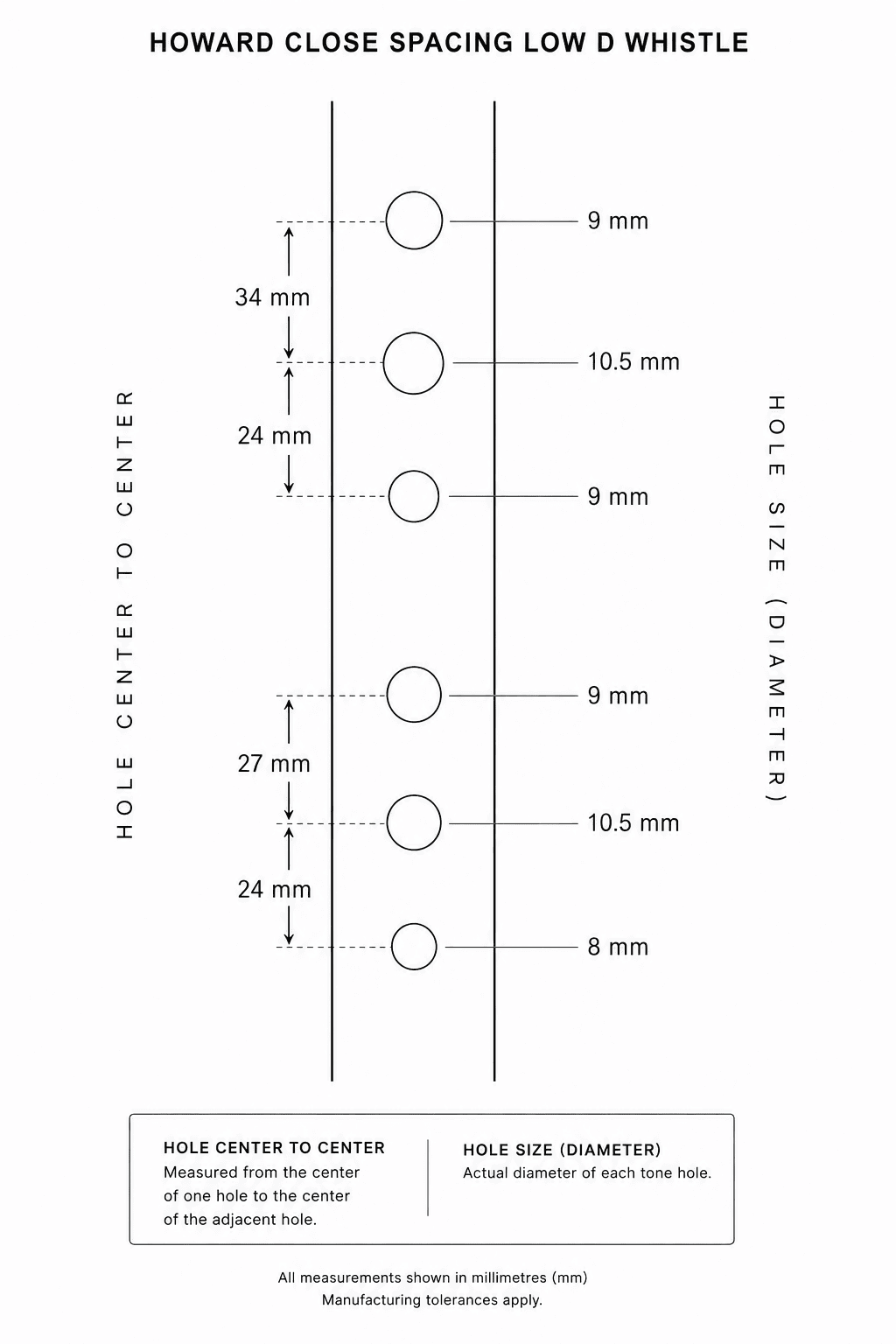
Choosing the Right Spacing
The Low D whistle is a much larger instrument than a standard high D, and the wider finger spacing can make the lower holes difficult to reach for some players.
Hand size is only part of the story. Finger length, flexibility, technique and grip all affect how comfortable a Low D feels. Our Close Spacing Low D whistle was developed for players who want a more comfortable reach without compromising the tuning or response of the instrument.
Why are Low D whistle holes so far apart?
The wide hole spacing of a conventional Low D is a consequence of its size and acoustic design. Tone-hole position affects tuning and response, so the holes cannot simply be moved closer together.
Developing the Howard Close Spacing Low D therefore required redesigning the instrument around a more compact finger position while maintaining accurate tuning and the character we wanted from the whistle.
A Low D whistle for smaller hands?
The Close Spacing model can be particularly helpful for players with smaller hands or limited flexibility, but it isn't only designed for them. Some players simply find the reduced stretch more comfortable.
Low whistles are normally played using piper's grip, which helps the fingers cover the larger holes and reduces the stretch required. We still recommend piper's grip with the Close Spacing Low D, but the closer hole positions make the reach easier.
Classic or Close Spacing?
If you are comfortable with traditional Low D finger spacing, the Classic is likely to be the natural choice.
If you have struggled to reach or reliably cover the holes on a Low D, have smaller hands or limited flexibility, or simply prefer a more relaxed playing position, the Close Spacing Low D may be the better choice.
There is no correct choice based purely on hand size. The important thing is that your hands can settle naturally onto the whistle, allowing you to concentrate on the music rather than the stretch.
Your Guarantee
Built to last. Enjoyed by musicians all over the world.
60 Day Money Back Guarantee
Try it out in the comfort of your own home or at your local folk gathering. Not convinced? We'll refund you.
10 Year Warranty
Built to last a lifetime. Your low whistle will be playing music for generations.
Free Shipping Worldwide
We're all neighbours. Whether you live in Ireland, China, or the USA, we're pleased to send it out to you for no extra cost.