Tin Whistle
The Complete Guide to The Irish Tin Whistle, Low Whistle and The People Who Make Them
The Irish tin whistle, or often called the penny whistle, is one of the most popular instruments in the folk scene. The low whistle is newer and becoming ever more popular. Learn all about the legendary folk instrument - the history, the makers, and the musicians who have made the tin whistle and low whistle famous all over the world.
Tin Whistle and Low Whistle Finder
Every Maker, Every Model
Whistle Finder
"It is the best whistle I have bought, now on my fifth make. Love to get any opportunity to play it, it has such as wonderful melodious sound, I only play my Howard whistle now"
Daithí Mac an Aircinn-via Email

PLAY
Free Delivery Worldwide
60 Day Home Trial
Free shipping ANYWHERE IN THE WORLD.
Tin Whistle and Low Whistle Buying Guide
If you look in the instrument bag of most whistle players and pipers you will more than likely see a selection of tin whistles, both low and high from different makers. So it’s not so much a case of finding the best tin whistle or best low whistle but rather of having a selection of tone colours and finding whistles that feel and sound right to you.


For All Your Other Whistle Needs. Expert Advice And The Best Seletction.
Key
When it comes to whistles the most stragitht forward way is to think of them in two catergories, high and low. Any whistle from Ab and above can be considered a High Whistle, any whistle from G down a Low Whistle. By far the most popular key for both high and low whistles is the key of D, as it is prodominently used in traditional Irish, Scottish and English folk music.
Tuneable or Non-Tuneable
The main difference between a beginners tin whistle and a professional tin whistle is tune-ability. If you intend to play with other instruments or along to music then you need a tuneable whistle. Non-tuneable whistles are generally cheaper, good to get started on but for serious playing some tune-ability is essential.

Whistle Body Material (bore)
The material of the bore does to a certain extent affect the sound of the whistle it can be conical or straight. The resonant quality as well as the hardness of the material affects the sound. Standard plastics and some woods are softer materials creating a more absorptive surface for the resonating body of air, Aluminium is harder but softer than brass or tin. Carbon fibre is hard and stiff. The reality is much more complex but you get the idea! Some woods for example are almost as hard as metal.
Most whistle bodies are made of one of the following materials.
-Aluminium
-Brass
-Wood
-Carbon Fiber
-Tin
-Plastic
Some physicists argue that the body material of a bore wind instrument such as whistles and flutes has no affect on perceived sound quality as long as they are of sufficient hardness, the determining factor being only the dimensions of the bore.
Most musicians think otherwise. Do fluotists spend 30,000 on a gold flute just because they look nice and so that they can brag about it? Atsui finish- In Japan Atsui means hot or deep, powerful and strong and is used to refer to a layer of precious metal (usually gold or silver) added to the body of an instrument in order to enhance and tailer the tone.
Aluminium
A new material when it comes to musical instruments. Examples, MK whistles, Goldie, Tony Dixon and Kerry.
Advantages- Light Weight, because of this a thicker tube can be used which makes the body acoustically quit inert, this allows the design to dominate. Aluminium is a soft metal so the sound is quite mellow while still being strong.
Disadvantages- Acoustically quite inert, the sound is not particularly enhanced by the resonant character of the body.
Aluminium is reactive to saliva, over time corrosion can occur in the head and body of the whistle.
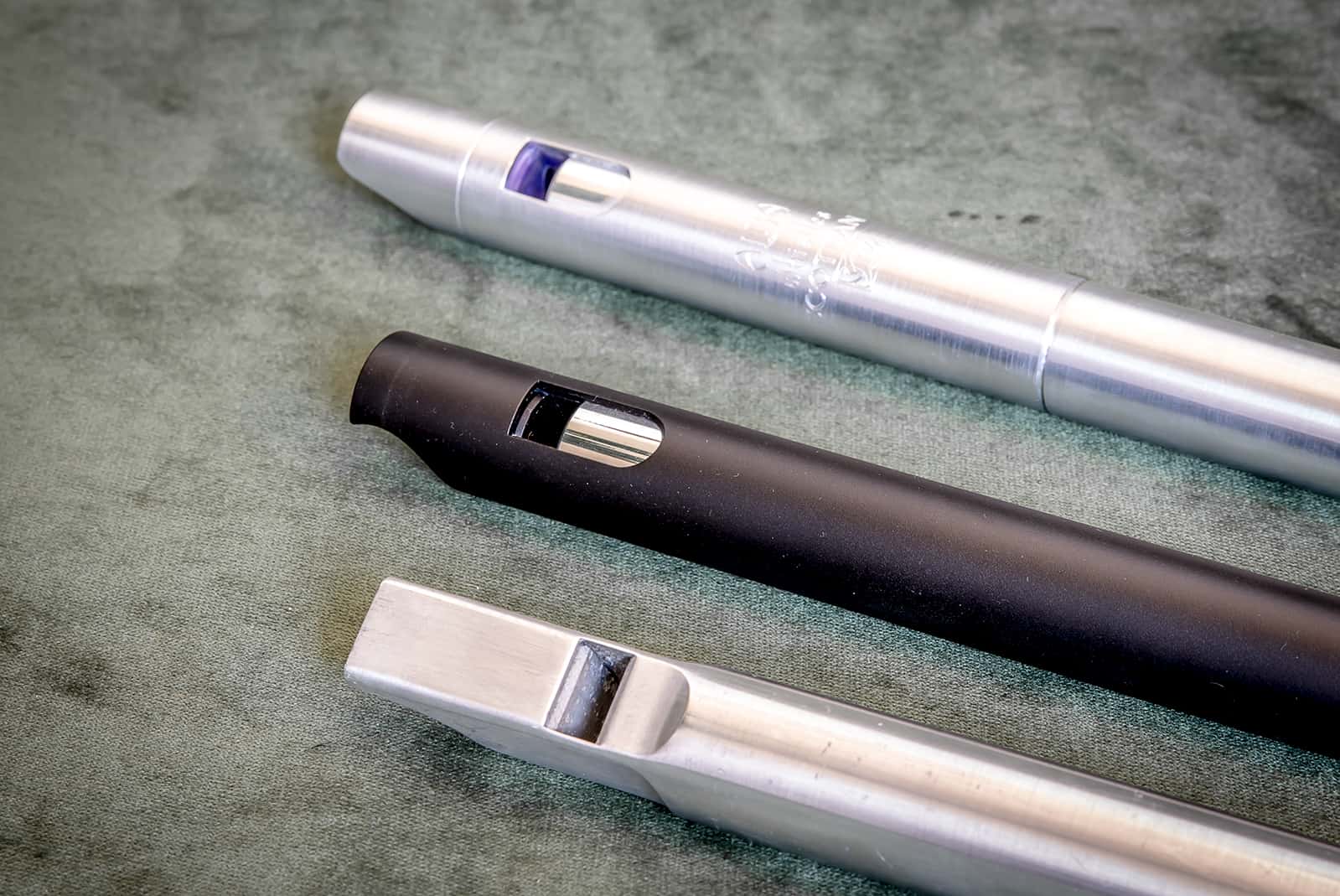
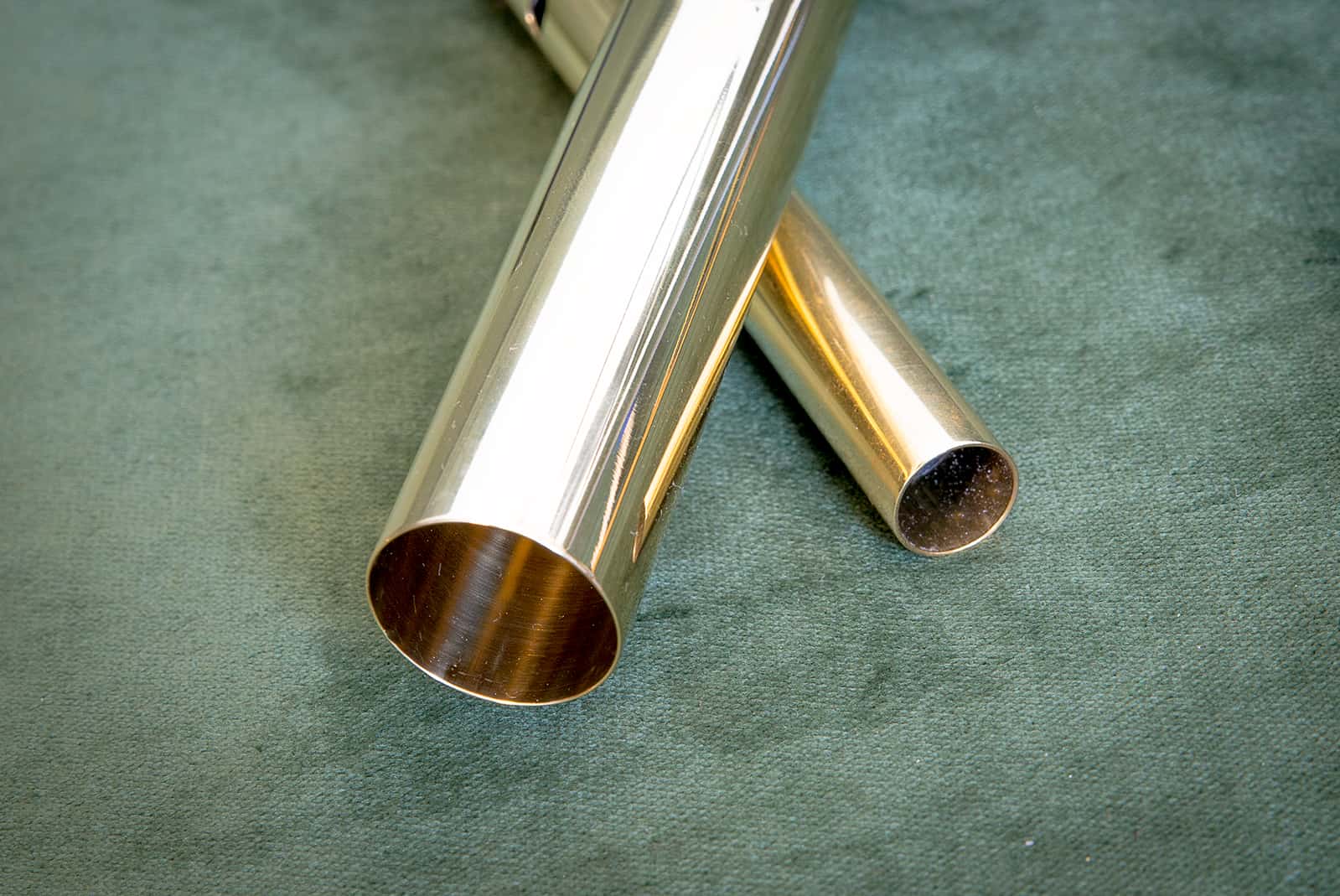
Brass
Brass has been a metal of choice for instrument makers for hundreds of years because of its excellent resonant properties. Examples- Howard, Copeland, Alba and Burke.
Advantages- Superb sound
-Internal finish can be very smooth helping acoustically
Disadvantages- If thick walled brass is used the instrument can be heavy, using a thin walled tube solves this problem.
-If unfinished brass tarnishes.
Wood
Wood also has excellent acoustic properties and has always been used to make instruments from. Examples- Abell, Bleazy, Bussman and Galeon.
Advantages-Superb sound
Disadvantages- Wood is very sensitive to humidity, in an instrument such as a whistle this can affect tuning as well as playability. As you play a whistle a certain amount of saliva comes into contact with the head and the body further exasperating the problem.

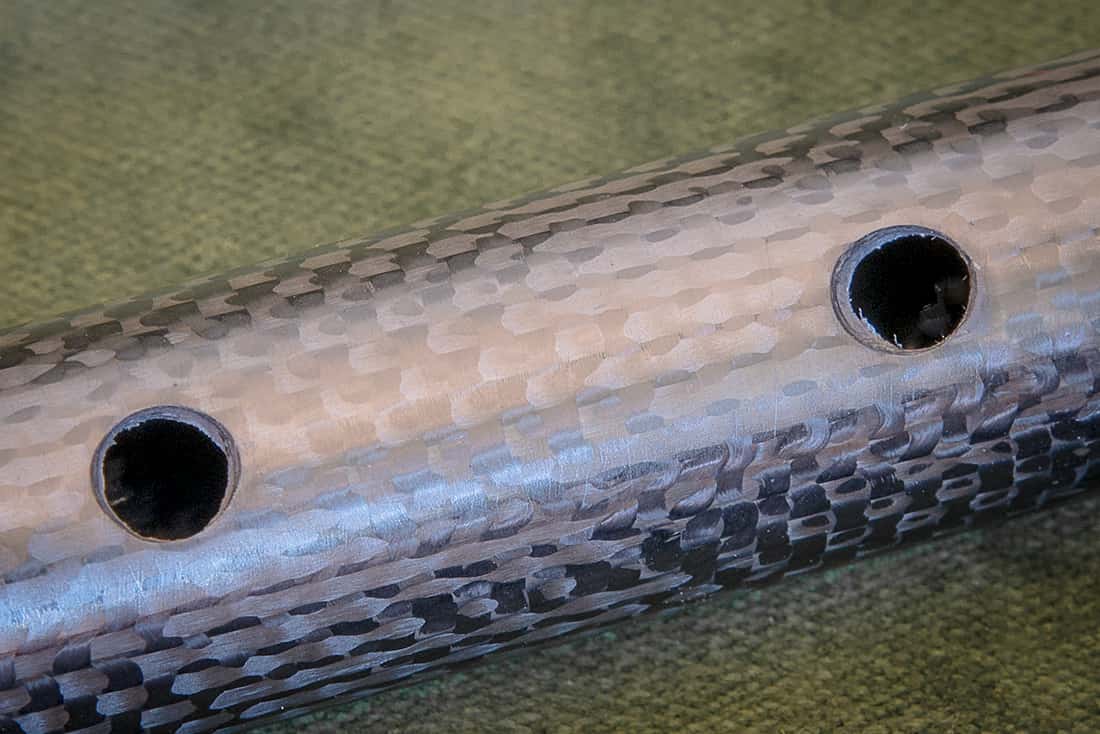
Carbon Fiber
The use of carbon fiber has steadily increased to the point where it is affordable to use it in more applications. Examples- Carbony, Erik and GRflutes.
Advantages- Exstreamly hard and resonant, similar in some ways to the hardest hardwoods, so has desirable acoustic qualities.
-Easily shaped
Disadvantages- Expensive
-Man made, synthetic material.
Tin
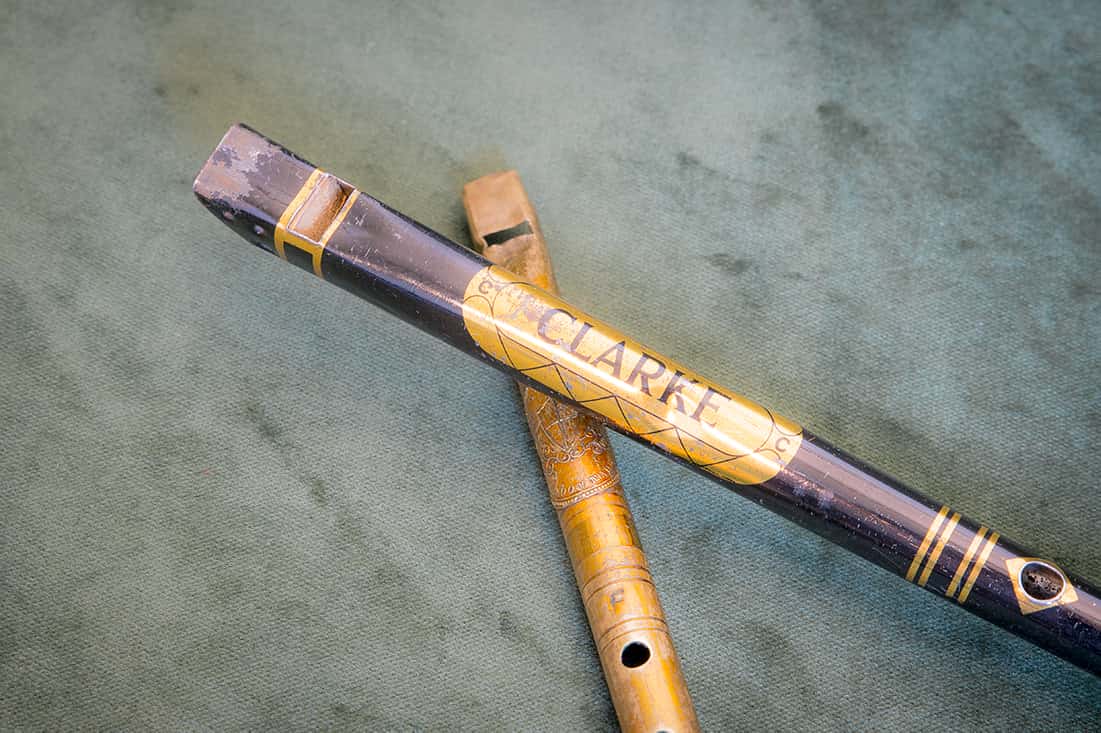
The original Clark penny whistles were made from tin sheet and then formed into a conical shape. Example- Clark.
Advantages- Cheap
-See history, below for more information.
-The acoustic characteristics are more forgiving of any acoustic design imperfections.
Disadvantages- A metal with few desirable acoustic properties.
Plastic
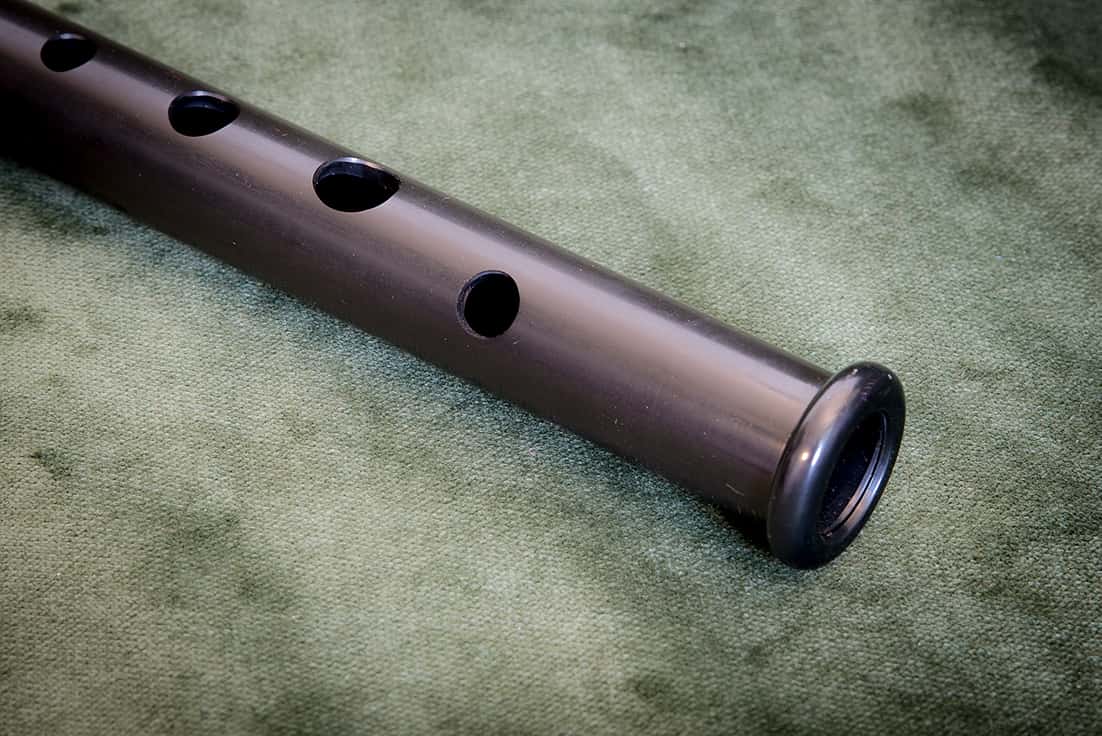
Plastic whistles are generally cheaper and have a more mellow sound. Examples- Susato, Chirs Wall, The Irish Whistle, Parks and Hermit Hill.
Advantages- A good design can be achieved.
-Cheap
-Plastic is relatively soft, thus the acoustic characteristics are more forgiving of any design imperfections.
Disadvantages- The body is not acoustically resonant in a beneficial way, little positive tone colour is added to the sound.
Straight or conical bore?
A conical bore allows for holes that are closer together and smaller than on straight bored instruments. It can also help with the upper octave. Examples makers- Clark Tin Whistles and Carbony. Straight bore examples- Overton and Howard.
Flutes used to have conical bores until Boehm discovered that an increased volume of air produced a clearer and more powerful tone. In 1847 he introduced a straight-cylindrical bodied flute with a parabolic contraction of the bore near the embouchure hole that improved the instruments low register.

Straight or conical bore?
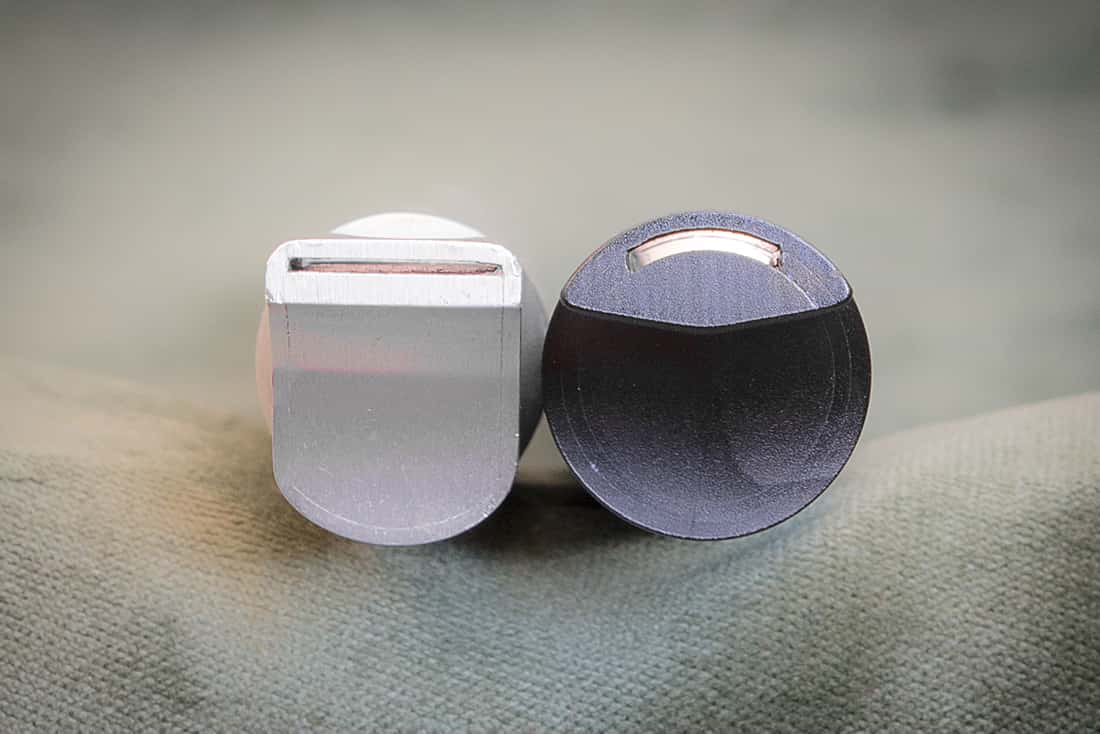
When you look into the end of a whistle head you will see either, something that looks like a letter box (straight wind way) or an upside down smile (curved wind way).
A straight wind way is cleaner from a fluid dynamics perspective but the most important aspect of any instrument is sound, so its better to think of the two different design approaches as producing different sound signatures rather than as one being better than the other.
History Of The Tin Whistle and Low Whistle
A look back at the milestones that shaped todays whistle landscape.
4500BC
-Bone Flute-
Neanderthal, Stone Age, Bone Flute found in Slovenia.
-Wicklow Pipes-
Found in Island.
2200-2000 BC
14th Century
-Dordrecht Recorder-
Medieval, Dordrecht Recorder, found in Holland. Norman bone flutes also found in Island.
-Modern Fageolets-
The first flageolets were called "French flageolets", and have four tone-holes on the front and two on the back. An early collection of manuscript Lessons for the Flajolet, dating from about 1676, is preserved in the British Library.
Early 17th Century
1843
-Clark Tin Whistle-
Clark invents the Tin Whistle, the design that all subsiquent whistles, both high and low are based on.
-Many New Makers-
Generation, Feadog and others start producing high whistles.
20th Century
20th Century
-Great players popularised the Tin Whistle
Mary Bergin, Micho Russell, Sean Potts, Brian Finnegan and others.
-Overton Low Whistle-
Bernard Overton produces the first low whistle made from aluminium.
1971
1974
-Howard Low Whistle-
Howard produces the first Brass Low whistle. Later the first low whistle produced in larger quantities to keep up with demand.
-Riverdance-
Popularises the low whistle.
1994
1997
-Titanic Theme Song-
Your heart will go on, features a famous low whistle solo popularising the low whistle further.
-Tony Dixon-
Tony Dixon starts producing the popular range of affordable low and high whistles.
1997
2000
-Mk Whistles-
Introduces the popular aluminium curved windway low whistles.
-Goldie Whistle-
Colin Goldie continues to produce low whistles based upon the original Overton design.
2009
Present Day
70 Tin Whistle Makers worldwide and growing!
The Tin Whistle continues to grow as a beautiful and accessible instrument.
Iceland, Suffolk and Ireland- just some of the places that have played a role in the history of the tin whistle (penny whistle) and low whistle.
The tin whistle, also known as the penny whistle, Irish whistle, or metal whistle, is a simple yet powerful woodwind instrument that plays a central role in Irish traditional music, Celtic folk music, and modern world music. Despite its humble appearance, the tin whistle is a direct descendant of the oldest musical instruments known to humankind, making it one of the most historically significant instruments still played today.
Ancient Origins of the Tin Whistle
The tin whistle belongs to the ancient family of fipple flutes, whose origins stretch back tens of thousands of years. Archaeological discoveries have uncovered flutes made from bird bone and mammoth ivory, estimated to be between 40,000 and 80,000 years old. These early instruments demonstrate humanity’s earliest attempts to transform breath into music — a lineage that continues today through the modern tin whistle.
Names and Terminology
Throughout its long history, the tin whistle has been known by many names, reflecting its widespread cultural adoption:
-
Tin whistle
-
Penny whistle
-
Irish whistle
-
Flageolet
-
Low whistle
-
High whistle
-
Belfast hornpipe
-
Feadóg stáin (Irish name)
These names are still widely searched today, making them essential keywords for understanding and discovering the instrument.
Instrument Classification and Design
The tin whistle is a fipple flute, similar to the Irish flute, but instead of a simple embouchure hole, it uses a fipple mouthpiece to direct airflow. This elegant design transforms breath into sound with remarkable efficiency.
It is closely related to other traditional fipple instruments such as:
-
The recorder
-
Flabiol
-
Txistu
-
Tabor pipe
The standard tin whistle features six finger holes, a cylindrical bore, and a bright, clear tone capable of spanning approximately two octaves.
High Whistle and Low Whistle Development
The first modern high whistle was produced in 1843 by Clarke in Suffolk, England, helping to popularize the instrument during the Victorian era due to its affordability and portability.
The modern low whistle has a more recent origin. It evolved from Victorian vertical flutes and was first developed in the early 1970s by Bernard Overton. Shortly afterward, Brian Howard began producing the first brass low whistles, using modern manufacturing techniques that helped define the instrument’s contemporary form.
Tuning and Musical Use
-
Tin whistles are typically diatonically tuned and named after their lowest note (e.g., D whistle, C whistle).
-
The D tin whistle is by far the most popular, especially in Irish traditional sessions.
-
Both high and low whistles are used for melodies, ornamentation, and expressive solo playing.
Modern Popularity and Cultural Impact
The popularity of both high whistles and low whistles has grown dramatically in recent decades.
-
Low whistles gained massive international exposure through performances in Riverdance and iconic film music such as “My Heart Will Go On” from Titanic.
-
The high whistle has expanded from just a handful of makers in the 1970s to over 60 makers worldwide today.
-
The low whistle has grown from only a couple of makers in the 1970s to more than 30 modern makers.
-
Today, there are over 70 penny whistle makers worldwide, reflecting the instrument’s global resurgence.
Famous Tin Whistle Players — Masters of the Whistle
The tin whistle owes much of its global popularity to a remarkable roster of musicians whose playing has shaped Irish traditional music, Celtic folk and world music. These whistle legends are frequently searched and celebrated for their distinctive style, recordings, and influence:
Mary Bergin — Iconic Traditional Whistler
Often considered the greatest tin whistle player of all time, Mary Bergin brought the whistle to the forefront of Irish traditional music with her virtuosity, clean ornamentation, and influential recordings such as Feadóga Stáin.
Micho Russell — Legendary Clare Whistler
Micho Russell is universally celebrated for his rhythmic, expressive whistle playing and deep roots in the West Clare tradition, making him one of the most famous names in whistle history.
Paddy Moloney (The Chieftains) — Global Ambassador of Irish Music
As founder of The Chieftains, Paddy Moloney’s whistle playing helped bring Irish traditional instruments to global stages and millions of listeners around the world.
Brian Finnegan — Innovator and Contemporary Master
Known for pushing the boundaries of whistle technique, Brian Finnegan blends traditional playing with innovative phrasing and energy, particularly through his work with the band Flook.
Joanie Madden — American Celtic Whistle Virtuoso
A leading figure in Irish music in the United States, Joanie Madden’s whistle playing with Cherish the Ladies has introduced the instrument to global audiences beyond Ireland.
Cathal McConnell — Tradition Keeper with The Boys of the Lough
McConnell’s whistle playing is deeply rooted in Irish and Scottish traditions, helping popularize Celtic music around the world.
Sean Potts — Classic Traditional Whistler
A foundational member of The Chieftains alongside Paddy Moloney, Sean Potts was known for his warm tone and traditional whistle style.
Carmel Gunning — South Sligo Whistle Stylist
A respected player, teacher, and composer, Carmel Gunning’s whistle style shows the rich influence of the Sligo tradition in Irish music.
Vinnie Kilduff — Multi‑Instrumentalist and Whistle Player
Recognized for his work with U2, The Waterboys, Clannad, and Sinéad O’Connor, Vinnie Kilduff is one of the best‑known contemporary Irish whistle players.
Andrea Corr — Celtic Pop Icon & Whistle Player
Best known as the lead singer of The Corrs, Andrea Corr also plays whistle, helping bring the instrument into pop and Celtic fusion music.
These players — from traditional pioneers like Mary Bergin and Micho Russell to contemporary stars like Brian Finnegan and Joanie Madden — have helped elevate the tin whistle from a humble folk instrument to a beloved voice of Celtic music worldwide.
Why the Tin Whistle Endures
Loved by beginners and professional musicians alike, the tin whistle remains one of the most accessible and expressive folk instruments ever created. Its ancient roots, simple design, and powerful emotional range ensure its continued relevance in traditional music, film scores, and modern compositions.